
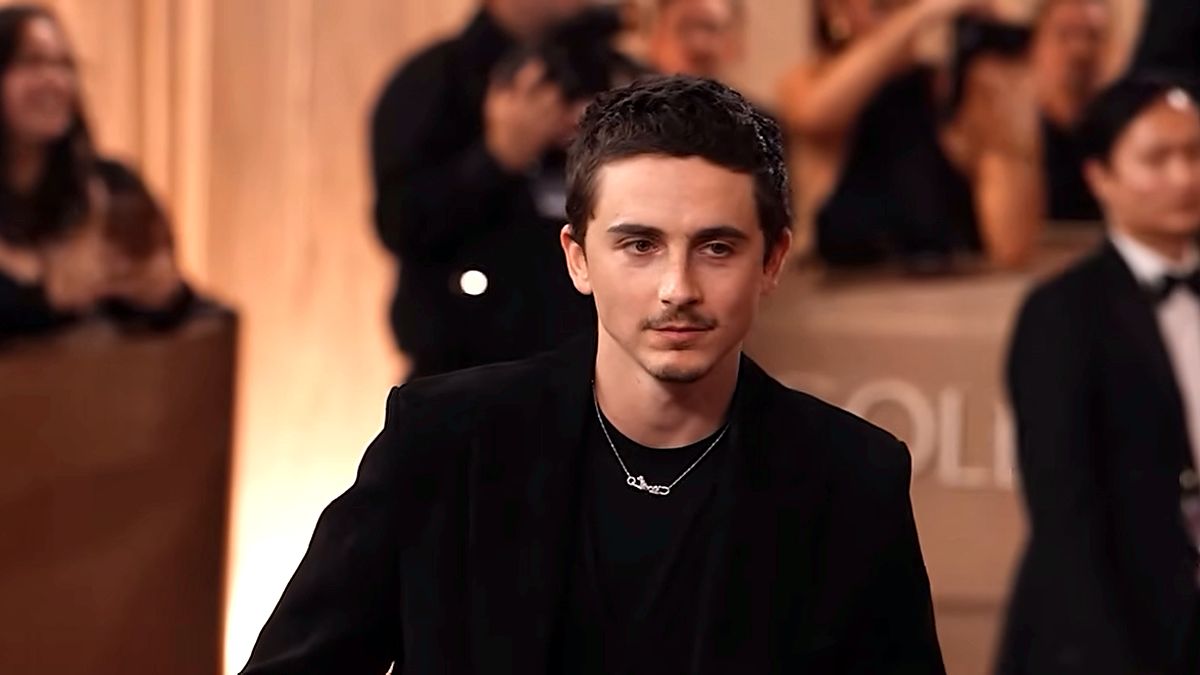
Timothée Chalamet is nearing the final chapter of Denis Villeneuve's Dune trilogy, with Dune: Part Three scheduled to reach North American theaters on December 18. The actor returns as Paul Atreides in a story that moves far beyond the young man's initial rise to power and into the consequences of ruling an empire. The latest publicity push has brought Chalamet back into public conversation alongside Zendaya and Anya Taylor-Joy, but the film's deeper attraction is the difficult transformation of a character who began the series as a vulnerable heir.
Warner Bros. has established the sequel's broad premise in its official marketing. The story takes place nearly two decades after Paul's consolidation of power, when the emperor faces threats arising from political instability, betrayal and the decisions that brought him to the throne. Chani remains central to the film's emotional stakes. Those details mark a shift in perspective from the earlier installments, which charted Paul's survival, alliances and emergence as a messianic figure. The new chapter asks what happens after an apparent victory changes the balance of an entire society.
That dramatic direction is rooted in the appeal of Frank Herbert's fiction, which has never been merely a tale of heroic combat and futuristic technology. The Dune universe is fascinated by prophecy, ecology, family power, religious belief and the dangers of placing extraordinary authority in one person. Villeneuve's first two films translated those ideas into expansive landscapes and intimate character conflict. The final installment now faces the demanding task of turning political consequences into compelling cinema without losing the human relationships that give the spectacle meaning.
Chalamet's performance will be central to that challenge. Paul is not the same person viewers met at the beginning of the trilogy, and the passage of time creates opportunities for a different kind of presence on screen. A ruler who understands how decisions affect millions of people may express authority through silence and restraint as much as through speeches or action sequences. Whether the film explores those possibilities in detail remains to be seen, but the official time jump makes the change in Paul's situation a confirmed part of the story rather than a rumor.
The supporting cast reinforces the production's scale. Zendaya returns as Chani, and the announced ensemble includes Jason Momoa, Florence Pugh, Rebecca Ferguson, Anya Taylor-Joy, Robert Pattinson and Javier Bardem. Their presence connects the film to earlier installments while allowing new dramatic tensions to develop. Warner Bros. has described the production as the concluding part of Villeneuve's trilogy, a designation that raises expectations about thematic closure even when the underlying literary universe contains additional stories.
Chalamet and his co-stars have also appeared in lighter promotional material ahead of the release. In a November 13 segment connected to the BBC's Children in Need initiative, Chalamet, Zendaya and Taylor-Joy participated in an interview prank in which children supplied unexpected instructions. The playful episode was far removed from the solemn atmosphere of the Dune films, but it offered audiences a glimpse of the performers interacting without the weight of their fictional characters. Promotional moments of that kind can humanize a large production and broaden its visibility beyond trailer-driven marketing.
The release calendar gives the movie another level of importance. December 18 is a date associated with substantial holiday moviegoing, when major releases compete for premium screens and audiences looking for a theatrical event. Villeneuve's use of large-format imagery has been central to the franchise's identity, and Warner Bros. is promoting the new chapter for IMAX as well as standard theaters. The technical presentation is part of the appeal, but it is not an automatic guarantee of either commercial success or critical approval. Those outcomes depend on how the finished film connects with viewers.
For Chalamet, completing a trilogy of this scale would mark an important point in a career that has included smaller dramas and widely discussed leading roles. Few actors get to follow a central character through an arc that changes not only the person's social position but the moral meaning of their decisions. Paul Atreides begins as someone trying to survive powerful institutions and becomes a leader whose own authority must be questioned. That arc gives the performer a challenge different from the one that normally defines a conventional action hero.
The upcoming film also provides a test for how modern science fiction handles endings. Franchise audiences are accustomed to stories leaving doors open for further chapters, spin-offs and new characters. Villeneuve's description of Part Three as his trilogy's conclusion creates a somewhat different expectation. Viewers may want emotional resolution, even if the fictional world itself continues to exist. Achieving that balance requires careful choices about which relationships and consequences deserve the final emphasis.
There will be time to debate the finished movie after its release. For now, the verified facts are sufficient: Chalamet reprises Paul, Zendaya returns as Chani, Villeneuve directs and Warner Bros. has set December 18 for North America. The story looks ahead to the cost of the emperor's power rather than simply replaying the battles that established it. That is a strong foundation for a finale, and a reason this particular December release has become one of the year's most closely watched entertainment events.
Join the Conversation
Share your perspective. Please keep the discussion respectful and relevant.